Official Ultimate Guide
Italian Medical
Schools

Your direct, meticulously structured pathway to the world's top Italian medical schools. We tear down academic and bureaucratic barriers to transform international applicants into successful MD students.
Mission Statement
Meditaliano is not just a website; it is an "Intelligent System" designed to automate and digitize the entire process toward your acceptance. This manual ensures you extract 100% of its functions, break information asymmetry, and seize victory through the shortest possible route.
Master Directory
I. The Meditaliano System
II. The 5 Strategic Weapons
III. Execution Protocols
IV. 6-Month Curriculum
V. 4-Month Intensive Course
VI. 2-Month Crash Course
VII. Plan Architecture
VIII. Admissions & Bureaucracy
"Preparation is the key to confidence. Practice is the key to excellence."
Elite Faculty & Educational Methodology
The Instructors
Our team is composed exclusively of high-achieving medical students and graduates who have successfully conquered the IMAT. We've been exactly where you are, and we know the traps.
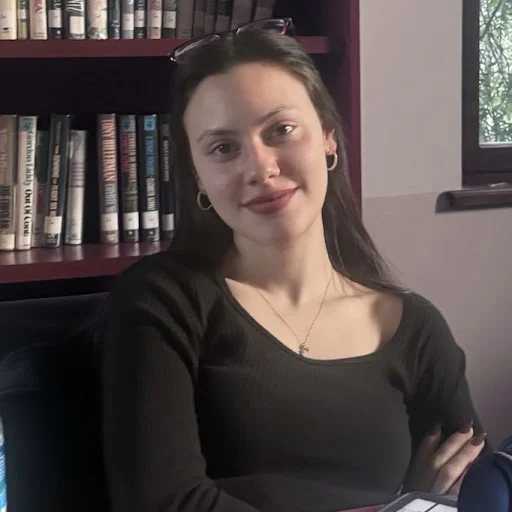
Işıl (Top 0.5% Scorer)
Leads Biology & Chemistry. Scored 73.8 points globally (Top 100 Rank). Her methodology focuses on interconnecting biological pathways and rapid nomenclature recognition to beat the clock.

Shion (Founder)
Leads Physics & Mathematics. Focuses strictly on quantitative shortcuts, dimensional analysis, and back-solving strategies. He turns your weakest subjects into your ultimate weapon.
Flipped Classroom & VOD Guarantee
The IMAT syllabus is vast and uncompromising. To maximize our 120-minute live sessions, we utilize a strict flipped-classroom methodology. Live sessions are explicitly engineered for advanced problem-solving, identifying trap answers, and rigorous Socratic questioning—not for basic theoretical introductions.
All live sessions are recorded in HD and permanently available on your dashboard for unlimited review until your exam day. Never miss a concept.
Account Setup & Personalization
Manage your environment and personal data in the Account Settings (/account/settings). Real-time data synchronization across all devices is the key to identifying your weaknesses instantly.
1. Menu - Quick Access Navigation
Access all critical learning links directly to start your daily grind. Bookmark these URls.
2. Profile Management
- Edit First/Last Name & Profile Image URL to personalize your presence in the cohort.
- Change Display Language & Update Country (vital for timezone synchronization).
- Email: Permanent (For Security Purposes, contact admin if a change is absolutely necessary).
3. Notifications & Security
Toggle switches for Email Alerts, Product Updates, and Promotional Offers to stay informed on your terms without spam.
Update credentials using the "Change Password" tool (8-character minimum required, alphanumeric mix advised).
4. Membership Status & Billing
Verify your Premium Scholar, Group Cohort, Pro Group, or Ultra VIP status. Check access levels, manage subscription billing, and explore upgrade benefits at any time via the automated portal.
The 5 Strategic Weapons
Your digital arsenal designed to obliterate the IMAT exam. The Meditaliano system provides a complete, self-contained ecosystem. You need no external textbooks.
Science Hub
Connecting the Dots: The Hall of Science. The massive knowledge required for IMAT is fully structured into 36+2 "Sessions." No more aimless textbook reading. We provide the exact boundaries of what you need to know.
Curriculum & Deep Dive
Structured Syllabus (0-24). High-Score modules for Biochemistry, Genetics, and Physiology. Access med-school level modules to understand "First Principles" rather than just memorizing disjointed facts.
Advanced & Drill Hub
Post-Entrance materials. Mechanism for Iterative Retention: solve highly specific problems immediately after input to cement long-term memory. Overcome the forgetting curve.
HD Video Masterclass Integration
Audio explanations by Dr. Pando and Shion synced with interactive slides. Break self-study limits through visual and auditory dialogue. Experience the feeling of a private tutor in your living room.
The 5 Strategic Weapons
Shuffled Practice Engine
6000+ Big Data Practice Engine. Domination through sheer, targeted volume. We integrated the best problems from the world's leading science entrance exams to ensure you never run out of high-quality material.
The Ultimate Data Bank
Includes questions structurally identical to IMAT, BMAT, TOLC-MED, and TOLC-F. The AI auto-selects a daily quota of 40 Qs. Or, use Custom Practice for extreme specific weakness targeting (e.g., "Generate 50 questions solely on Genetics and Probability").
Adaptive Shuffle & Focus
Randomized choices prevent memorizing "A" or "B", forcing true logical deduction. The deep filter function empowers scope adjustment across all 4 exam sections. Turn your weaknesses into strengths through repetitive, randomized exposure.
The 5 Strategic Weapons
Past Papers Archive
Dissecting the Past for the Future. We transformed static, boring PDFs into high-efficiency interactive learning modules. The examiners have patterns; we expose them.
Timeline & Analysis
Every official IMAT exam from 2011 to Present, fully digitized. Our Premium Logical Analysis Engine helps you understand exactly why other options are wrong, allowing you to master the "Logical Template" of the Cambridge and MUR examiners.
Mobile Integration & Review
Shuffled choices in our mobile view build a personalized Weakness Inventory on the go. Advanced Review materials cover background hacks. Solving one past question becomes an opportunity to master 10 related concepts across the syllabus.
The 5 Strategic Weapons
Mocks & Translations
Strategic Mock Exams & Breaking Information Asymmetry. Prepare for the actual battle by fighting in the exact same conditions.
40+ Full Mocks (Simulation)
Live Percentile Rankings (S~F) via advanced radar charts. 100-minute extreme condition training that faithfully replicates the actual IMAT environment, MUR distribution, and difficulty levels. Measure yourself against the international cohort.
Complete Translations Database
TOLC-MED full translations since 1997. BMAT Section 2 fully translated and explained to make the IMAT feel "easy." Unlock hidden Italian archives that domestic students use. You will no longer be at a disadvantage to Italian natives.
Execution Protocols
Learning Protocol (Daily Cycle)
Science Hub: Mapping
Absorb audio & visual slides. Focus on "Why" using Deep Dive modules. Never skip the integrated Drill Hub.
Shuffled Practice: Memory
Daily Practice maintains general touch, Custom Practice eradicates specific weak points aggressively.
Simulation: Tactics
Weekend 100-min full mock. Master time management, skipping logic, and psychological stress resistance.
The Golden Ratio
Passive reading is the enemy. Devoting 70% of study time to output (practice/mocks) is the ironclad rule for IMAT victory. We enforce this ratio.
Science Hub Masterclass Manual
Ensure you have a completely quiet environment for maximum focus before entering the masterclass. PC or Tablet use is strictly required for high-resolution diagram visibility.
Encrypted Access Password
e24y1xb
Keyboard Controls
The 3-Step Study Method
- Audio Required: Ensure browser TTS (Text-to-Speech) is allowed to hear the character dialogue clearly.
- Active Listening: Listen to English audio while simultaneously tracking emerald bold text and diagrams visually. Multi-sensory coordination creates deep retention.
- Practice Examples: Answer the interactive questions that appear mid-lecture instantly. Check explanations to clear doubts on the spot before moving forward.
Phase 1: Scientific Foundations (Weeks 1 - 3)
The first phase rebuilds your scientific knowledge from the ground up. Do not underestimate these topics; they form the interconnected basis required to solve complex MUR-style questions later on.
| Week / Subject | Deep Syllabus Breakdown & Execution Tactics |
|---|---|
W1 Mar 15 Biology 0 | Basis of Life & Water PropertiesHierarchy: From subatomic particles to the biosphere. Water Chemistry: Covalent vs Hydrogen bonding, Cohesion, Adhesion, High specific heat capacity, High latent heat of vaporization, Solvent properties, and the anomalous expansion of water at 4°C. Foundations: pH scale, biological buffers (bicarbonate system), Monomers vs. Polymers, dehydration synthesis, and hydrolysis reactions. MUR Trap Alert: Questions frequently test the conceptual reasoning behind water's density curve. Don't just memorize "ice floats"; understand the exact geometry of the hydrogen lattice structures. Pre-Study: Sciencehub Bio Mod 1 + 50 Q-Bank Drills |
W2 Mar 22 Chem 0-1 | Atomic Theory & PeriodicityAtomic Structure: Bohr & Quantum mechanical models, orbitals (s, p, d, f shapes), quantum numbers (n, l, ml, ms). Isotopes and basic mass spectrometry. Configurations: Aufbau principle, Pauli exclusion, Hund's rule. Periodic Trends & Bonding: Electronegativity, atomic radius, ionization energy, electron affinity. Ionic, covalent (polar/non-polar, coordinate), and metallic bonding. Intermolecular forces (Van der Waals, H-bonds). Execution Strategy: Memorize exceptions to the Aufbau principle instantly (Cr, Cu). Use electronegativity trends (diagonal across the periodic table) to rapidly predict bond polarity without calculations. Pre-Study: Chem Mod 1-2 + 80 Q-Bank Drills |
W3 Mar 29 Math 1-2 | Core Algebra & FunctionsNumber Sets: N, Z, Q, R definitions. Fractional operations, proportions, ratios, and percentages. Core Algebra: Powers, roots, exponential functions, and mastering the fundamental laws of logarithms. Equations: Solving linear/quadratic equations, absolute values, and complex algebraic inequalities. Execution Strategy: Calculators are banned. We drill mental math approximations and "Back-Solving" techniques—plugging multiple-choice answers into the constraints to bypass complex algebra entirely. Pre-Study: Math Mod 1-2 + 50 Q-Bank Drills |
Phase 1: Scientific Foundations (Weeks 4 - 6)
| Week / Subject | Deep Syllabus Breakdown & Execution Tactics |
|---|---|
W4 Apr 5 Biology 4 | Biomolecules I: Carbs & LipidsCarbohydrates: Monosaccharides (aldoses vs ketoses, glucose, fructose, galactose, ribose), Disaccharides (sucrose, lactose, maltose), Polysaccharides (starch, glycogen, cellulose, chitin), alpha vs beta glycosidic bonds. Lipids: Triglycerides structure, saturated vs unsaturated fatty acids, cis/trans configurations, phospholipids (amphipathic nature in membranes), steroids (cholesterol, hormones). MUR Trap Alert: You must be able to visually identify these molecules from bare skeletal structural diagrams. Expect a question showing 5 random hexagons and asking which one is a steroid precursor. Pre-Study: Bio Mod 2 + 60 Q-Bank Drills |
W5 Apr 12 Biology 5 | Biomolecules II: Proteins & DNAProteins: Amino acid generic structure, R-groups properties (polar, non-polar, acidic, basic), peptide bonds. Primary, secondary (alpha-helix/beta-sheet), tertiary, and quaternary folding structures. Denaturation factors. Nucleic Acids: DNA/RNA structures, nucleotide anatomy (sugar, phosphate, base), purines (A,G) vs pyrimidines (C,T,U), phosphodiester bonds, antiparallel double helix structure. Execution Strategy: Memorize the hydrogen bond counts: 3 bonds for G-C (stronger), 2 for A-T. Questions frequently ask you to determine the melting temperature of a DNA strand based on its GC percentage. Pre-Study: Bio Mod 3 + 60 Q-Bank Drills |
W6 Apr 19 Chem 2 | Stoichiometry & SolutionsStoichiometry: The mole concept, Avogadro's number, calculating molar mass, determining empirical vs molecular formulas from mass percentages. Chemical Reactions: Balancing complex equations, identifying limiting and excess reactants, calculating theoretical and percent yields. Solutions: Concentration calculations (Molarity, Molality, mass percentage), dilution formulas (M1V1 = M2V2). Execution Strategy: Do not waste time with precise decimal calculations. Learn our rounding and proportional reasoning techniques to eliminate 3 out of 5 options instantly before doing a single calculation on paper. Pre-Study: Chem Mod 3 + 100 Q-Bank Drills |
Phase 2: Cellular Dynamics & Systems (Weeks 7 - 9)
Transitioning from static structures to dynamic processes. Here, we integrate physical forces and cellular biology to understand how living systems operate, transport matter, and consume energy.
| Week / Subject | Deep Syllabus Breakdown & Execution Tactics |
|---|---|
W7 Apr 26 Physics 1-2 | Mechanics & KinematicsKinematics: Vectors vs Scalars, distance/displacement, velocity, acceleration, interpreting v-t and s-t graphs, free fall, projectile motion. Dynamics: Newton's 3 Laws of motion, friction (static/kinetic), tension, normal forces. Energy & Momentum: Work, kinetic/potential energy, conservation of mechanical energy, power, linear momentum, elastic vs inelastic collisions. Execution Strategy: Master Dimensional Analysis. If you forget a complex physics formula during the exam, analyzing the units of the given numbers and the answer choices often reveals the required mathematical operation. Pre-Study: Phys Mod 1-2 + 50 Q-Bank Drills |
W8 May 3 Biology 6 | Cytology & OrganellesCytology: Detailed comparison of Eukaryotic vs Prokaryotic cells (size, ribosomes 70S vs 80S, DNA structure, reproduction methods). Organelles: Anatomy and function of the Nucleus, Ribosomes, Rough/Smooth ER, Golgi apparatus, Lysosomes, Peroxisomes, Vacuoles, Mitochondria, Chloroplasts. Cytoskeleton: Microtubules, microfilaments, intermediate filaments. Endosymbiotic theory evidence. MUR Trap Alert: Simply distinguishing between plant and animal cells is too basic. The IMAT tests the functional pathway of a protein from the Rough ER to exocytosis via the Golgi apparatus. Trace the exact path. Pre-Study: Bio Mod 4 + 70 Q-Bank Drills |
W9 May 10 Biology 7 | Membrane Transport SystemsMembrane Structure: Fluid mosaic model, role of cholesterol in fluidity, integral/peripheral proteins, glycoproteins and glycolipids. Passive Transport: Simple diffusion, facilitated diffusion (channel vs carrier proteins), osmosis, tonicity (hypertonic, hypotonic, isotonic environments) and plasmolysis. Active Transport: Primary active transport (Na+/K+ pump), secondary active transport (co-transport), vesicular transport (endocytosis, pinocytosis, phagocytosis, exocytosis). Execution Strategy: Master the specific stoichiometric ratios of the Na+/K+ pump (3 Na+ out, 2 K+ in). This exact ratio is tested heavily as it relates to the Nervous System action potentials taught in Phase 3. Pre-Study: Bio Mod 5 + 60 Q-Bank Drills |
Phase 2: Cellular Dynamics & Systems (Weeks 10 - 12)
| Week / Subject | Deep Syllabus Breakdown & Execution Tactics |
|---|---|
W10 May 17 Chem 3 | Organic Chemistry IOrganic Intro: Carbon hybridization (sp3, sp2, sp), sigma vs pi bonds, predicting molecular geometry and bond angles. Hydrocarbons: Alkanes, alkenes, alkynes, aromatic rings (benzene structure and stability). Functional Groups: Identification and properties of alcohols, ethers, aldehydes, ketones, carboxylic acids, esters, amines, amides. Basic IUPAC nomenclature rules and group priorities. Execution Strategy: Build visual flashcards for functional groups. Exam questions frequently present a massive, complex drug molecule and ask you to accurately count the number of specific functional groups within 60 seconds. Pre-Study: Chem Mod 4 + 80 Q-Bank Drills |
W11 May 24 Biology 8 | Bioenergetics & EnzymologyBioenergetics: Laws of thermodynamics in biology, endergonic vs exergonic reactions, the structure and hydrolysis of ATP, energy coupling. Enzymology: Lowering activation energy, active sites, induced fit model, cofactors/coenzymes. Environmental effects (pH, temperature graphs). Inhibition: Competitive, non-competitive, uncompetitive inhibition, allosteric regulation, feedback inhibition metabolic pathways. MUR Trap Alert: Know exactly how competitive vs non-competitive inhibitors differently affect Vmax and Km on an enzyme kinetics graph. Visual graph analysis is a favorite testing method for this topic. Pre-Study: Bio Mod 6 + 60 Q-Bank Drills |
W12 May 31 Math 3-4 | Geometry & TrigonometryGeometry: Euclidean geometry (properties of triangles, Pythagoras, circles, polygons, transversals, similar/congruent figures). Solid geometry (calculating volumes and surface areas of cylinders, spheres, cones, prisms). Trigonometry: Sine, cosine, tangent definitions. The unit circle, radians, basic trigonometric identities, and solving right triangles. Execution Strategy: Memorize the specific values of sine/cosine for 30°, 45°, and 60° angles. These exact numerical values are required to solve Physics projectile motion questions without a calculator. Pre-Study: Math Mod 3-4 + 70 Q-Bank Drills |
Phase 2 & 3: Energy & Genetics (Weeks 13 - 15)
This block contains the absolute highest-yield biology topics on the IMAT. We move deeply into energy generation and the foundational genetics required to understand the central dogma of life.
| Week / Subject | Deep Syllabus Breakdown & Execution Tactics |
|---|---|
W13 Jun 7 Biology 9 | Cellular Respiration PathwaysGlycolysis: Investment vs payoff phases, net ATP/NADH, location (cytoplasm). Aerobic Pathways: Pyruvate oxidation, Krebs Cycle (Citric Acid Cycle specific inputs/outputs per glucose vs per acetyl-CoA). Oxidative Phosphorylation: Electron Transport Chain (ETC) complexes, the critical role of oxygen as the final electron acceptor, chemiosmosis, ATP synthase mechanism. Anaerobic: Lactic acid and alcoholic fermentation pathways. MUR Trap Alert: You must memorize the exact net yield of ATP, NADH, and FADH2 per molecule of glucose at every single isolated stage of the process, not just the final total. Pre-Study: Bio Mod 7 + 80 Q-Bank Drills |
W14 Jun 14 Biology 10 | PhotosynthesisFoundations: Chloroplast anatomy. The nature of light and photosynthetic pigments (chlorophyll a/b, carotenoids). Light-Dependent Reactions: Photosystem II and I, non-cyclic vs cyclic electron flow, photolysis of water, generation of ATP and NADPH. Light-Independent Reactions: The Calvin cycle (Carbon fixation, role of RuBisCO, reduction, regeneration of RuBP). Evolutionary adaptations (C3, C4, and CAM plant mechanisms). Execution Strategy: Compare and contrast spatial locations. Know exactly where protons accumulate (thylakoid space vs intermembrane space) in photosynthesis vs cellular respiration. Pre-Study: Bio Mod 8 + 60 Q-Bank Drills |
W15 Jun 21 Biology 11 | Cell Division & ReproductionCell Cycle: G1, S, G2, M phases, G0 resting state. Role of Cyclins and CDKs in regulation. Apoptosis mechanisms. Mitosis vs Meiosis: Detailed phases (Prophase, Metaphase, Anaphase, Telophase). Differences between Meiosis I (reductional) and Meiosis II (equational). Genetic Variation: Crossing over (chiasmata formation) in Prophase I, independent assortment in Metaphase I, and non-disjunction chromosomal errors (aneuploidy). Execution Strategy: Questions frequently ask you to calculate the exact number of chromatids or DNA molecules present at very specific cellular phases (e.g., Anaphase I vs Anaphase II of a human cell). Pre-Study: Bio Mod 9 + 80 Q-Bank Drills |
Phase 3: Central Dogma & Physics (Weeks 16 - 18)
| Week / Subject | Deep Syllabus Breakdown & Execution Tactics |
|---|---|
W16 Jun 28 Physics 3-4 | Thermodynamics & DC CircuitsThermodynamics: Temperature vs Heat, specific heat capacity, latent heat (fusion/vaporization), heat transfer (conduction, convection, radiation). Ideal gas laws (Boyle, Charles, Gay-Lussac, Avogadro). Direct Current (DC): Electric charge, Coulomb's law, electric fields/potential. Current, voltage, resistance, Ohm's Law. Resistors/capacitors in series and parallel. Electrical power. Execution Strategy: Circuit diagrams are virtually guaranteed to appear. Practice rapidly simplifying complex, multi-branch resistor networks into a single equivalent resistance value using visual heuristics. Pre-Study: Phys Mod 3-4 + 60 Q-Bank Drills |
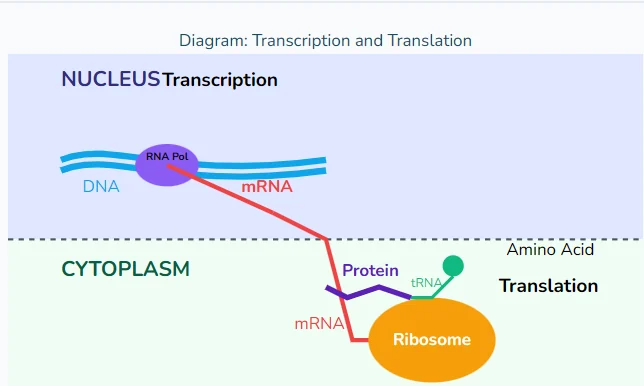
W17 Jul 5 Biology 12 | The Central Dogma of Molecular BioDNA Replication: Role of specific enzymes (helicase, DNA polymerase, primase, ligase, topoisomerase), leading vs lagging strands, Okazaki fragments. Transcription: Promoters, RNA polymerase, mRNA processing (introns/exons, splicing, 5' cap, poly-A tail). Translation: Ribosome structure, tRNA, codons, anticodons, initiation, elongation, termination. Point mutations (silent, missense, nonsense, frameshift). MUR Trap Alert: Pay extreme attention to 5' to 3' directionality. Examiners will deliberately give you a 3'-5' template strand and try to trick you on the resulting mRNA transcription sequence. Pre-Study: Bio Mod 10 + 70 Q-Bank Drills |
W18 Jul 12 Biology 13 | Classical & Human GeneticsClassic Genetics: Mendelian laws (segregation, independent assortment). Genotype vs phenotype, homozygous/heterozygous, dominant/recessive. Monohybrid and dihybrid crosses, test crosses. Non-Mendelian: Codominance (ABO blood groups), incomplete dominance, polygenic inheritance, epistasis, pleiotropy. Human Genetics: Sex-linked traits, autosomal linkage, and calculating probabilities from complex family pedigree charts. Execution Strategy: Pedigree charts are high-yield. Learn to instantly identify autosomal recessive vs dominant vs sex-linked patterns just by looking at the rules of affected offspring without filling out Punnett squares. Pre-Study: Bio Mod 11 + 80 Q-Bank Drills |
Phase 3: Advanced Chemistry & Physiology (Weeks 19 - 21)
| Week / Subject | Deep Syllabus Breakdown & Execution Tactics |
|---|---|
W19 Jul 19 Chem 14 | Equilibrium, Acids/Bases & RedoxEquilibrium: Reversible reactions, equilibrium constants (Kc, Kp), Le Chatelier's principle (effects of concentration, pressure, temp shifts). Acids & Bases: Arrhenius, Brønsted-Lowry, Lewis definitions. Strong vs weak acids, calculating pH/pOH, buffers, titration curves. Redox: Assigning oxidation states, oxidizing/reducing agents, balancing complex half-reactions, galvanic cells, standard electrode potentials. MUR Trap Alert: When applying Le Chatelier's principle to pressure changes, remember to strictly count only the moles of *gases*, completely ignoring solids and aqueous liquids in the equation. Pre-Study: Chem Mod 5 + 80 Q-Bank Drills |
W20 Jul 26 Math 5-6 | Statistics, Probability & CombinatoricsStatistics: Descriptive stats (mean, median, mode, range, variance, standard deviation). Interpreting histograms, and scatter plots. Probability: Mutually exclusive events (Addition rule), independent events (Multiplication rule), conditional probability, tree diagrams. Combinatorics: Fundamental counting principle, factorials, permutations (order matters), combinations (order does not matter). Execution Strategy: The IMAT loves combining genetics questions with combinatorics. You must be able to rapidly calculate the exact probability of "3 out of 5 children" inheriting a specific trait using binomial expansions. Pre-Study: Math Mod 5-6 + 60 Q-Bank Drills |
W21 Aug 2 Biology 17-18 | Human Physiology: Systems ICirculatory Sys: Heart anatomy, cardiac cycle (systole/diastole), blood vessels, pulmonary vs systemic circuits, blood composition. Respiratory Sys: Anatomy of airways, mechanism of breathing (diaphragm), gas exchange at alveoli, hemoglobin oxygen dissociation curve, Bohr effect. Digestive & Excretory: Digestive enzymes, absorption in villi. Kidney anatomy, nephron structure (glomerulus, Bowman's capsule, Loop of Henle), urine formation. Execution Strategy: Use "Memory Mapping." Link how a drop in blood pH (Chem) affects hemoglobin affinity (Biochem), triggering the medulla (Nervous) to alter diaphragm contraction rates (Anatomy). Pre-Study: Bio Mod 12 + 100 Q-Bank Drills |
Phase 3: Final Mastery (Weeks 22 - 24)

| Week / Subject | Deep Syllabus Breakdown & Execution Tactics |
|---|---|
W22 Aug 9 Biology 19-20 | Human Physiology: Systems IINervous Sys: Neuron structure, resting potential, action potential depolarization/repolarization (Na+/K+ channels), synapses, neurotransmitters. CNS vs PNS. Endocrine Sys: Hypothalamus, pituitary, thyroid, adrenal, pancreas. Mechanisms of peptide vs steroid hormones, negative feedback loops. Immune Sys: Innate barriers, phagocytes, inflammatory response. Adaptive immunity: B-cells (antibodies), T-cells (helper, cytotoxic), memory cells, vaccines. MUR Trap Alert: Negative feedback loops are heavily tested. Know exactly what happens to TRH and TSH levels if the thyroid gland is artificially removed or hyperactive. Pre-Study: Bio Mod 13 + 100 Q-Bank Drills |
W23 Aug 16 Chem 15 | Advanced Organic ChemistryAdvanced Isomerism: Structural isomers, chain, position, functional group isomers. Stereoisomerism: geometric (cis/trans, E/Z), optical (enantiomers, chirality centers). Reaction Mechanisms: Recognizing primary organic reactions: nucleophilic substitution (SN1/SN2), electrophilic addition, elimination, oxidation of alcohols, esterification. Execution Strategy: Focus on identifying chiral carbons. If a carbon is attached to 4 different groups, it's chiral. This simple heuristic solves 80% of optical isomer questions instantly. Pre-Study: Chem Mod 6 + 60 Q-Bank Drills |
W24 Aug 23 Physics 5-6 | Fluids, Magnetism & Nuclear PhysicsMagnetism: Magnetic fields, right-hand rules, forces on moving charges (Lorentz force), electromagnetic induction (Faraday/Lenz). Fluid Dynamics: Density, pressure, Pascal's principle, Archimedes' principle (buoyancy), ideal fluids, continuity equation, Bernoulli's equation. Nuclear Phys: Atomic structure, mass defect, binding energy, alpha, beta, gamma decay equations, half-life calculations. MUR Trap Alert: In buoyancy questions, always clearly distinguish between the mass of the object and the mass of the fluid displaced. Don't mix up the densities in calculations. Pre-Study: Phys Mod 5-6 + 50 Q-Bank Drills |
The Logic & General Knowledge Framework
You might notice "Logical Reasoning" and "General Knowledge" are not given dedicated weekly lectures in the curriculum. This is a deliberate, data-driven choice based on recent MUR format changes which drastically shifted the focus towards hard sciences.
Continuous Micro-Dosing
Logic skills cannot be "crammed". Instead, 5-10 logic questions are integrated into every single weekly quiz and mock. This micro-dosing builds subconscious pattern recognition over 6 months without wasting core lecture time.
GK Compendium
GK constitutes a tiny fraction of points. Rather than wasting live hours on trivia, students receive our highly condensed PDF GK Compendium and practice via Sciencehub daily for 10 minutes.
Mandatory Weekly KPIs (Accountability)
Attending live classes is merely 30% of the work. To guarantee admission, students are strictly monitored against the following weekly targets via the Sciencehub dashboard. Consistently falling behind triggers an academic intervention from our tutors.
100+ Question Bank Drills
Complete a minimum threshold of correctly answered questions strictly related to the current week's topic to build muscle memory.
1 Weekly Mini-Mock
A 30-minute, 20-question randomized mock exam integrating past topics to enforce spaced repetition and prevent knowledge decay.
Error Log Root Cause Analysis
Manually entering missed questions into a tracker. Identify if the error was due to: Lack of knowledge, Misreading, or Calculation error.
Monthly Milestone Exams (Full Mocks)
At the end of every month, the entire cohort undergoes a heavily proctored, 100-minute full mock simulating exact MUR conditions.
Late April
Diagnostic Mock. Tests base retention.
Target: 40-45
Late May
Core Systems. Org Chem & Metabolism.
Target: 50-55
Late June
Integration. Genetics & Thermodynamics.
Target: 60-65
Late July
Full Readiness. Pre-Battle baseline.
Target: 70+
The Battle Phase
August 30 - September 16, 2026
Execution Day
September 17
The absolute transition from learning to pure execution. Theoretical lectures cease entirely. We shift exclusively to Daily High-Pressure Simulations. This 3-week bootcamp is designed to forge extreme cognitive stamina and flawlessly execute the strategies learned in Phases 1-4.
Stamina Building (Aug 30 - Sep 5)
3 Full Mocks/week. Focus on sitting perfectly still for 100 minutes without losing concentration. Deep peer review of incorrect logic to fix systemic errors.
Speed Optimization (Sep 6 - Sep 12)
4 Full Mocks/week. Time limits are artificially reduced to 85 minutes to force rapid decision making, triage, and elimination of perfectionism.
Peak Performance (Sep 13 - Sep 16)
Daily Mocks executed at exactly 15:00 CET (real IMAT time) to align circadian rhythms. Final mindset adjustments and confidence building. No studying the day before.
Psychological Prep & Triage Strategy
The IMAT is a grueling 100-minute sprint. Fatigue, panic, and anxiety ruin more scores than a lack of knowledge. Our curriculum includes dedicated strategies to forge an unbreakable mindset.
1. Triage & Skipping
Perfectionism is lethal. We train students to instantly identify "time-trap" questions designed by examiners to steal your time. You will learn to confidently skip a 3-minute physics question within 15 seconds to secure three 1-minute biology questions instead.
2. Circadian Alignment
In the final month, we mandate that all simulated mocks are taken at the exact hour of your real exam (typically afternoon). This physically aligns your brain's peak cognitive performance and glucose utilization window with the test time.
3. Simulated Stress Testing
By cutting your mock exam time down to 85 minutes during Week 2 of the Battle Phase, we force you to operate under extreme pressure. When you finally sit for the real 100-minute exam, it will feel comparatively slow, spacious, and completely manageable. Panic is eliminated through exposure therapy.
4-Month Intensive
Starts May 13, 2026 | Accelerated Pathway
Designed for students starting their preparation in late spring. This highly dense curriculum requires twice the weekly commitment of the standard course. Live classes are held strictly on Wednesdays and Saturdays.
Investment: €79 - €119 / month (Dependent on student background screening).
| Timeline | Wednesday Class Instructor: Işıl (Science) | Saturday Class Instructor: Shion (Quant) |
|---|---|---|
W1 May 13/16 | Bio 0 & Chem 0-1Hierarchy of life, water chemistry, pH scale. Atomic structure, orbitals, quantum numbers. Configurations and Periodic trends. Milestone: Master quantum rules. | Math 1-2: Core AlgebraNumber sets (N, Z, Q, R), fractional ops. Powers, roots, exponential functions, laws of logarithms. Solving linear/quadratic equations. Milestone: Rapid mental math. |
W2 May 20/23 | Bio 4 & Chem 2Carbs and Lipids. The mole concept, empirical/molecular formulas. Balancing complex equations and calculating limiting reactants. Milestone: Visual ID of lipids. | Bio 5 & Chem 3 (Işıl)Proteins (primary-quaternary) and Nucleic Acids. Organic Chem Intro: hybridization, functional groups, and IUPAC nomenclature. Milestone: Protein folding. |
W3 May 27/30 | Bio 6 & Bio 7Cytology: Prokaryote vs Eukaryote, Organelles. Membrane structure, passive/active transport, osmosis, tonicity, endocytosis. Milestone: Transport pathways. | Phys 1-2: MechanicsVectors vs Scalars, free fall, projectile motion. Newton's 3 laws, friction. Work, kinetic/potential energy, and linear momentum. Milestone: Projectile formulas. |
W4 Jun 3/6 | Bio 8 & Chem 14Enzyme kinetics, active sites, inhibition types. Chemical Equilibrium, Le Chatelier, Acids/Bases, pH, and Redox half-reactions. Milestone: Redox balancing. | Bio 9 & Bio 10 (Işıl)Cellular Respiration (Glycolysis, Krebs, ETC, ATP yields) & Photosynthesis (Light-dependent, Calvin cycle, C3/C4). Milestone: ATP yield mapping. |
4-Month Intensive
Block 2: Weeks 5 - 8| Timeline | Wednesday Class Instructor: Işıl (Science) | Saturday Class Instructor: Shion / Işıl (Alternating) |
|---|---|---|
W5 Jun 10/13 | Bio 11 & Chem 15Cell Division (Mitosis/Meiosis). Advanced Organic Chemistry: Isomerism (optical/geometric), reaction mechanisms (SN1/SN2). Milestone: SN1 vs SN2 visual ID. | Math 3-4: Geometry (Shion)Trigonometry (unit circle, SOH CAH TOA). Euclidean geometry (triangles, transversals, polygons). Solid geometry volumes. Milestone: Rapid angle calc. |
W6 Jun 17/20 | Bio 12 & Bio 13Central Dogma (DNA replication, Transcription, Translation, Mutations). Classical/Human Genetics (Mendelian laws, sex-linked traits). Milestone: Pedigree hacks. | Bio 16 & Bio 17 (Işıl)Theories of evolution, Hardy-Weinberg equilibrium. Human Systems I: Cardiovascular System & Respiratory System. Milestone: Bohr effect curve. |
W7 Jun 24/27 | Bio 18 & Bio 19Digestive/Excretory Systems (nephron filtration). Nervous System (action potentials) & Endocrine System (negative feedback loops). Milestone: Negative feedback. | Phys 3-4: Thermo/DC (Shion)Heat capacity, latent heat, ideal gas laws (PV=nRT), thermodynamics. Current, voltage, resistance, Ohm's laws, resistor circuits. Milestone: Resistor networks. |
W8 Jul 1/4 | Bio 20: Human Systems IVImmune System (innate barriers vs adaptive immunity, B-cells, T-cells, antibodies, vaccines) & general Homeostasis principles. Milestone: T-cell/B-cell roles. | Milestone Mock 1Live, proctored 100-minute Diagnostic Mock Exam under full MUR conditions. Followed by a tactical review session. Target: 45+ pts. Milestone: Establish baseline. |
4-Month Intensive
Block 3: Weeks 9 - 12| Timeline | Wednesday Class Instructor: Işıl (Science) | Saturday Class Instructor: Shion / Işıl (Alternating) |
|---|---|---|
W9 Jul 8/11 | Adv Biochem ReviewBridging the gap to first-year medical school. Advanced synthesis and metabolic pathway integration. Connects to real physiology. Milestone: Pathway integration. | Math 5-6: Statistics (Shion)Descriptive stats (mean, median, variance). Probability rules (AND/OR, conditional), tree diagrams. Combinatorics for genetics. Milestone: Probability logic. |
W10 Jul 15/18 | Adv Anatomy ReviewFirst-year medical school preparation. Advanced Histology (identifying tissue types visually) and pathological anatomy introductions. Milestone: Visual histology. | Phys 5-6: Modern Phys (Işıl)Magnetism, electromagnetic induction (Faraday). Fluid dynamics (Pascal, Bernoulli, buoyancy). Nuclear physics (alpha/beta decay). Milestone: Fluid dynamics. |
W11 Jul 22/25 | Logic & Reading SkillsDedicated workshop on logical deduction, problem-solving heuristics, identifying assumption flaws, and rapid reading tactics. Milestone: Passage triage. | Milestone Mock 2 (Shion)Live execution. Target: 50+ points. Tests your integration of organic chemistry, cellular dynamics, and kinematics. Milestone: Score progression. |
W12 Jul 29/Aug 1 | Adv Chem ReviewFocus on visual recognition of complex organic molecules and rapid calculation of stoichiometry ratios using proportional logic. Milestone: Proportional logic. | Adv Phys/Math Review (Işıl)Consolidation of quantitative methods. Drilling cross-disciplinary problems (e.g., using geometry to solve physics vector forces). Milestone: Cross-discipline. |
4-Month Intensive
Block 4: Final SprintIn this new structured format, the entire 16 weeks are utilized for curriculum mastery, targeted reviews, and milestone mocks. You will continuously hone your skills up until the exam.
| Timeline | Wednesday Class Instructor: Işıl (Science) | Saturday Class Instructor: Shion / Işıl (Alternating) |
|---|---|---|
W13 Aug 5/8 | Logic & Cytology Deep DiveSecond pass on logical deduction mixed with Cellular Biology. Focusing on spatial reasoning, cell division mapping, and complex syllogisms. Milestone: Logic integration. | Milestone Mock 3 (Shion)100-minute timed sprint testing the entire syllabus. Establish readiness. Target: 55+ points. Target: 55+ points. |
W14 Aug 12/15 | Acids, Bases & Redox ReviewSolving high-level Chemistry calculation traps. Re-visiting pH, buffer systems, and the most common mistakes in assigning oxidation numbers. Milestone: Calculation traps. | Milestone Mock 4 (Işıl)Time limit strictly reduced to 85 minutes to enforce pressure triage and skipping techniques. Target: Speed & Triage. |
W15 Aug 19/22 | Physiology I: Cardio & RespAdvanced breakdown of the circulatory and respiratory systems. Tracing oxygen from alveoli to mitochondria. Heart pressure graphs. Milestone: System tracing. | Milestone Mock 5 (Shion)Final 85-minute pressure mock to eliminate perfectionism entirely and solidify your triage strategy. Target: Perfectionism elimination. |
W16 Aug 26/29 | Physiology II: Endo & NeuroAdvanced breakdown of the endocrine and nervous systems. Detailed action potential graphs and complex negative feedback hormone loops. Milestone: Action potentials. | Final Readiness Mock (Işıl)Return to standard 100-minute time. Establish your baseline readiness before the exam. Final logistics and mindset briefing. Target: 65+ points. |
2-Month Crash Course
Starts July 2 | Hyper-Triage Pathway
Ruthless Triage Strategy
8 weeks only. It is mathematically impossible to learn 100% of the syllabus from scratch. We skip low-yield topics and focus 100% of our energy on the highest-scoring question types.
Pricing: One-time €399 (Full) | €199 (Phys/Math Only) | €299 (Bio/Chem Only). Compatible with PRO/ULTRA 1-on-1s.
| Timeline | Tue: Phys/Math 15:00 - 17:00 (Shion) | Thu: Bio/Chem 15:00 - 17:00 (Işıl) | Sat: Bio/Chem 12:00 - 14:00 (Işıl) |
|---|---|---|---|
W1 Jul 2-7 | Math: Algebra HacksBypassing complex logs and equations using rapid back-solving techniques. | Bio/Chem FoundationsWater properties, atomic theory, quantum numbers, and bonding types. | Cytology & MembranesOrganelle functions, active/passive transport (Na+/K+ pump), cell cycle basics. |
W2 Jul 9-14 | Phys: KinematicsProjectile motion shortcuts and 1D kinematics without calculators. | Chem: StoichiometryRapid mole calculations, limiting reactants, gas laws. | MetabolismGlycolysis, Krebs, ETC ATP yields, and Photosynthesis. |
W3 Jul 16-21 | Thermo & CircuitsResistor networks simplification, Ohm's law, heat capacity. | Organic Chem I & IIFunctional groups, chirality, SN1/SN2 reaction visual ID. | Central DogmaReplication, Transcription, Translation, and Mutations. |
W4 Jul 23-28 | Geometry & TrigHigh-yield Euclidean properties and right-triangle trigonometry ratios. | Eq, Acids & RedoxLe Chatelier, pH calculations, balancing redox half-reactions. | Full Mock 1First diagnostic integration of the triage strategy under time pressure. |
2-Month Crash Course
Phase B: Weeks 5 - 8| Timeline | Tue: Phys/Math 15:00 - 17:00 (Shion) | Thu: Bio/Chem 15:00 - 17:00 (Işıl) | Sat: Bio/Chem 12:00 - 14:00 (Işıl) |
|---|---|---|---|
W5 Jul 30-Aug 4 | Prob & CombinatoricsAND/OR rules, permutations/combinations for genetics prep. | Genetics & PedigreesVisual pedigree charting, Mendelian laws, probability integration. | Human Systems ICardio, Respiratory, and Digestive system critical pathways. |
W6 Aug 6-11 | Fluids & NuclearBuoyancy, continuity equation, alpha/beta decay, half-life. | Human Systems IINervous (action potentials), Endocrine, and Immune response. | Full Mock 2100-minute timed sprint testing the full triaged syllabus. |
W7 Aug 13-18 | Quant Speed DrillsRapid 30-second problem recognition. Error log review. | Science Speed DrillsReviewing the top 20 most failed concepts from Mocks 1-2. | Full Mock 3Timer reduced to 85 minutes to enforce triage skills. |
W8 Aug 20-25 | Logic & ReadingProblem-solving heuristics and comprehension tactics. | Organic MechanismsElimination reactions, esterification, and isomer review. | Full Mock 4Final 85-minute pressure mock. End of Course. |
Add-on Integration Strategy
The 2-Month course is extremely modular. You can purchase Biology & Chemistry (€299) in the group setting, while simultaneously combining it with 1-on-1 private tutoring strictly for Physics & Math (via the PRO plan Add-on) where you are weakest.
Meditaliano Pricing & Plan Summary
Our system is modular. First, select the Timeline (Course) that fits your start date. Then, select the Support Level (Plan) that fits your academic needs and budget.
Step 1: Select Your Timeline
6-Month Standard
Starts March
The complete, standard-paced curriculum. Builds foundations slowly.
€59 - €99 /mo(Variable pricing structure).
4-Month Intensive
Starts May 13
Accelerated. Wed & Sat classes. Requires double the weekly commitment.
€79 - €119 /mo(Varies by student background. Default is €119/mo).
2-Month Crash
Starts July 2
Hyper-triage. Skips low-yield topics. Tue, Thu, Sat schedule.
€399 One-Time(Modular options: Phys/Math €199, Bio/Chem €299).
Step 2: Select Your Support Level
Premium Plan
Self-study core foundation. Full digital infrastructure access, but without live tutoring or personalized mentor support.
Group Class Plan (Base Tier)
Cohort learning environment (Max 10 students). Best for self-motivated students who want live lectures, Q&A, and structured schedules at an affordable rate.
PRO Plan
Micro-Group focus (1-on-2 or 1-on-3). Includes personalized AI drill tracking, medical school anatomy prep, and priority private WhatsApp support.
ULTRA Plan (VIP Concierge)
Strictly 1-on-1 private tutoring. Complete offloading of Italian bureaucracy: we fully manage your Universitaly pre-enrollment, DoV/CIMEA processing, Embassy Visa applications, and local housing search.
Detailed Feature Matrix
| Feature | Premium Self-Study | Group Class Cohort | Pro Micro-Group | Ultra 1-on-1 VIP |
|---|---|---|---|---|
| Core Study Resources | ||||
| Past Paper Explanations (IMAT/BMAT) | ||||
| 20+ Full Mock Exams | ||||
| 6000+ Question Bank | ||||
| Science Hub Strategy Guides | ||||
| 200-Day Daily Practice Plan | ||||
| Application Newsletters | ||||
| Fundamental Science PDF Bonus | ||||
| Personalized Tutoring & Support | ||||
| Weekly IMAT Practice (3h) | ||||
| Weekly Live Q&A Study Hall (3h) | ||||
| Personalized Scheduling & Tutor Chat | ||||
| Monthly Mock Exam & Report | ||||
| Weekly Motivational Messages | ||||
| All-Inclusive Ultra Features | ||||
| Weekly Private Lessons (Bio/Chem) | ||||
| Weekly Private Lessons (Phys/Math) | ||||
| Full Application & VISA support | ||||
| Document Translation | ||||
| Visa & Accommodation Support | ||||
| Monthly Mock Test & Review Session | ||||
| Fee Reduction / Scholarship Eligibility | ||||
Group Class Weekly Schedule
All times are indicated in Central European Time (CET). The table below illustrates the standard weekly rhythm for the 6-Month, 4-Month, and 2-Month cohort classes. (PRO and ULTRA schedules are dynamically arranged).
|
14:00
Science (Işıl)
|
17:00
Science (Işıl)
Q-Bank Drills
Quant (Shion)
Q-Bank Drills
Science (Işıl)
Q-Bank Drills
Science (Işıl)
Q-Bank Drills
Chat Support
Quant/Sci (Alt.)
Mock Exams
|
19:00
Quant (Shion)
Recorded VODs
Can't make a live session due to time zone differences? Every session is recorded in HD and permanently added to your dashboard for 24/7 review until exam day.
PRO/ULTRA Scheduling
If you purchase the PRO or ULTRA 1-on-1 add-on, your private sessions are scheduled dynamically outside of these fixed group hours based entirely on your personal availability.
The Meditaliano Success Funnel
PREM & GROUP Path
Best for students who desire a structured cohort learning experience. Perfect for those wanting specific schedules adapted to international time zones, mixing large group motivation with expert lectures.
The PRO Path
Best for prioritizing routine and affordability. The shared-cost economics drastically reduce expenses while securing you 1-on-2 or 1-on-3 highly targeted feedback and peer metacognition.
The ULTRA Path
Targeting Milan, Bologna, or Sapienza? Radically reduce stress. Total customization. All academic gaps and Italian bureaucratic variables (Visa, DoV) are handled by our concierge.
Why Choose Italy? The Global Advantage
An elite medical education does not require a crippling financial investment. Italy provides world-class, globally recognized degrees entirely in English, at a fraction of the cost of US, UK, or Australian alternatives.
Annual Tuition Fee Comparison
Estimated Average Annual Tuition (International Students)
Financial Aid & Meditaliano Scholarships
We believe in rewarding dedication and supporting talent. Our Meditaliano Ultra plan includes several opportunities for fee reductions and scholarships. Please Note: All fee reductions and scholarships are processed as refunds after the initial tuition fee has been paid in full. Eligibility will be assessed upon application.
1. Enrollment Timing Rebate
Receive a partial refund based on your enrollment month. Early commitments are heavily subsidized.
2. IMAT Score Scholarship
Proven excellence deserves a reward. Students who achieved a score higher than the previous year's minimum for the University of Pavia (relevant to their EU/non-EU status) will receive a 50% tuition fee reduction.
3. Need-Based Assistance
We provide support for students facing challenges. Fee reduction eligibility extends to students from single-parent households, those with disabilities, and others with outstanding academic records.
4. Top Scorer Award
Aim for the top and get rewarded. The Meditaliano student who achieves the absolute highest IMAT score in our cohort will be awarded a 50% tuition scholarship, refunded after their successful admission to medical school.
IMAT Admission Scores & Quotas (2023-2025)
The comprehensive historical minimum scores required for entry. Analyzing these trends is critical for understanding market demand and securing a safe admission strategy.
Red: Hyper-Competitive (>70) | Orange: Mid-Tier (>60) | Green: Accessible (<60)
| University | Non-EU Seats | Non-EU 2025 | Non-EU 2024 | Non-EU 2023 | EU Seats | EU 2025 | EU 2024 |
|---|---|---|---|---|---|---|---|
| Bari | 11 | 49.3 | 65.8 | 31.2 | 69 | 56.5 | 57.3 |
| Bologna | 20 | 70.3 | 74.5 | 59.1 | 130 | 61.2 | 64.8 |
| Cagliari | 20 | 54.2 | 56.5 | N/A | 80 | 54.8 | 55.7 |
| Campania (Vanvitelli) | 32 | 66.2 | 63.2 | 47.3 | 70 | 56.6 | 57.8 |
| Catania | 60 | 61.6 | 57.2 | — | 0 | — | 56.7 |
| Federico II (Naples) | 45 | 63.1 | 68.1 | 52.0 | 25 | 60.2 | 61.4 |
| Marche (Ancona) | 60 | 58.2 | 60.3 | 43.0 | 20 | 57.8 | 58.4 |
| Messina | 56 | 58.2 | 61.4 | 36.9 | 55 | 55.3 | 55.7 |
| Milan (Statale) | 15 | 72.9 | 75.7 | 60.2 | 55 | 66.2 | 67.8 |
| Milan-Bicocca | 18 | 65.1 | 72.6 | 54.2 | 30 | 64.6 | 64.8 |
| Padova | 25 | 65.4 | 71.6 | 49.5 | 75 | 59.8 | 63.2 |
| Parma | 45 | 67.6 | 59.1 | 50.1 | 75 | 58.0 | 57.6 |
| Pavia | 40 | 73.0 | 71.2 | 53.3 | 103 | 60.5 | 59.1 |
| Rome Sapienza | 13 | 65.8 | 73.4 | 50.8 | 45 | 62.4 | 65.1 |
| Rome Tor Vergata | 20 | 69.1 | 60.6 | 53.4 | 60 | 58.5 | 59.5 |
| Turin | 32 | 66.2 | 70.8 | 49.0 | 70 | 59.5 | 59.5 |
| Siena (Dentistry) | 2 | — | 69.3 | 51.3 | 33 | 54.6 | 58.0 |
| Sapienza (Dentistry) | 6 | 71.8 | 73.1 | 59.1 | 19 | 58.3 | 61.8 |
The Biennial Fluctuation Trend
Notice the massive swings in scores for universities like Bari (from 31.2 to 65.8, back to 49.3). This is the "Biennial Fluctuation." When a university has a very low cutoff one year, it attracts a surge of applicants the next year, drastically raising its cutoff. Therefore, looking at a single year is highly dangerous. You must analyze the 3-year projection models (see next page).
2026 IMAT Cutoff Projections
We have rigorously analyzed admission data from the past three years to project the 2026 minimum scores. Accounting for typical fluctuations in exam difficulty and applicant volume, we anticipate the actual cutoffs will fall within a ±3% range of our calculated baseline models. (EU baseline scores include a systematic +7.5 adjustment to accurately reflect rising EU-specific competitiveness).
Non-EU Projections (±3%)
| Milan (Statale) | 69.5 – 73.7 |
| Bologna | 68.8 – 73.1 |
| La Sapienza (Med) | 68.2 – 72.4 |
| Milan-Bicocca | 66.9 – 71.0 |
| La Sapienza (Dent) | 66.0 – 70.0 |
| Pavia | 65.8 – 69.9 |
| Padova | 65.2 – 69.2 |
| Turin | 64.0 – 68.0 |
| Federico II | 63.1 – 67.0 |
| Bari | 61.9 – 65.7 |
| Tor Vergata | 59.2 – 62.9 |
| Campania | 59.1 – 62.7 |
| Parma | 58.1 – 61.7 |
| Marche (Ancona) | 56.1 – 59.6 |
| Messina | 55.5 – 58.9 |
| Cagliari | 52.4 – 55.6 |
EU Projections (±3%)
| Milan (Statale) | 65.7 – 69.7 |
| La Sapienza (Med) | 63.2 – 67.1 |
| Milan-Bicocca | 63.1 – 67.0 |
| Bologna | 61.8 – 65.6 |
| Federico II | 61.2 – 65.0 |
| Padova | 59.6 – 63.3 |
| La Sapienza (Dent) | 58.6 – 62.2 |
| Pavia | 58.4 – 62.0 |
| Tor Vergata | 57.9 – 61.5 |
| Turin | 57.8 – 61.4 |
| Marche (Ancona) | 56.3 – 59.7 |
| Parma | 56.1 – 59.5 |
| Campania | 55.6 – 59.0 |
| Bari | 55.1 – 58.5 |
| Siena (Dent) | 54.4 – 57.8 |
| Messina | 53.8 – 57.1 |
University Targeting & "Hidden Gems"
The Non-EU Constraint
Non-EU candidates have only ONE binding choice. You cannot change this. If your mock scores are borderline (50-65 points), do not gamble on hyper-competitive hubs like Milan or Bologna. A degree from Messina is worth exactly the same as one from Milan across the entire EU.
2026 "Hidden Gems" (穴場)
Based on applicant behavior trends and seat quotas, we project several excellent universities to have dropping or highly accessible cutoffs next year. Target these to practically guarantee a seat:
Tor Vergata, Parma, Campania, Cagliari, and Messina.
Application Roadmap & Bureaucracy
Passing the IMAT is only half the battle. Italian bureaucracy is notoriously unforgiving. Missing a single deadline or holding an incorrect document can disqualify you from taking the exam entirely, regardless of how much you studied.
1. Pre-Enrollment (March - July)
Register on Universitaly.it. Non-EU students must select exactly ONE binding university. This choice is sent to the Italian embassy in your country and cannot be altered.
2. Diploma Validation (April - July)
You must prove your high school diploma is equivalent to the Italian standard (12 years of schooling). Obtain a DoV (Declaration of Value) from the embassy OR a CIMEA Statement online.
3. IMAT Exam Registration (July - August)
Separate from pre-enrollment. Log into Universitaly during the specific 2-3 week window to register for the actual test, select your global test center (e.g., Dubai, New York, Tokyo), and pay the exam fee (~€130).
4. Visa & Enrollment (Aug - Oct)
Non-EU students apply for a Type D Study Visa. After scores are published in October, admitted students have a strict 4-day window to formally enroll online. If you miss this window, your seat is given to the next person.
Comprehensive FAQ (Part 1)
What if the MUR suddenly changes the test format or syllabus?
Italian ministries can be unpredictable. If the MUR changes the exam structure, syllabus, or scoring logic, Meditaliano immediately mobilizes its academic team to update all video modules, study materials, and mock exams to match the new standard. All enrolled students will receive these critical updates delivered to their dashboard at absolutely no additional cost. We guarantee you are always studying the correct material.
What specific payment methods are accepted on your platform?
We utilize Stripe and PayPal to process payments worldwide with bank-level security. We accept all major credit and debit cards (Visa, Mastercard, Amex), PayPal, Apple Pay, Google Pay, and direct SEPA bank transfers. Furthermore, students from lower-income nations automatically have a Purchasing Power Parity (PPP) discount applied.
Can I use Italian government education vouchers (like Carta Cultura or 18app)?
Because our primary payment gateways are international, automated checkout using Italian government cards is not natively supported on our checkout page. However, we DO accept them! Simply contact our WhatsApp support team, and we will manually create a specific payment link or voucher code to process your government bonus.
Comprehensive FAQ (Part 2)
I already have physical textbooks from another IMAT academy. Can I deduct them from the course fee?
Meditaliano is fundamentally different from traditional academies. We are a 100% digital, constantly updated ecosystem. Because the IMAT changes rapidly, static physical books become outdated instantly. Therefore, there are no physical books to "exclude" from your package. All of our highly advanced, interactive study materials are integrated online, and our pricing reflects access to the digital platform, not the shipping of paper.
If I start with a lower plan, can I upgrade later? Will I lose the money already paid?
Upgrading is seamless and risk-free! If you purchase the Premium plan and later decide you want to include advanced analytics and tutoring in the Super, Pro, or Ultra plans, the amount you previously paid is fully credited and deducted from the higher tier's price. You pay exactly the difference.
How specifically do I access the course content, and how long does it take?
Because we are a 100% digital academy, there is zero waiting time for international shipping. The very second your payment is confirmed, the Science Hub, all VOD video lessons, the Q-Bank, and AI simulators are instantly unlocked on your personalized dashboard, 24/7/365. You can start studying within 60 seconds of enrollment.
Shion's Final Instructions
"Students, premium features are your ultimate arsenal for 'Autopilot to Success.' Watching the Science Hub before our private sessions transforms our time into something 10x more intense. When you're ready, let's start with Dr. Pando! Try the Sample Test A first!"



Italian Private Medical Schools (English MD Programs)
Comprehensive admission guides, quotas, entrance test syllabi, tuition fees, and deposit schedules for San Raffaele, Humanitas MEDTEC, Cattolica Rome/Bolzano, Campus Bio-Medico, UniCamillus, Link Campus, and UniNeuromed.
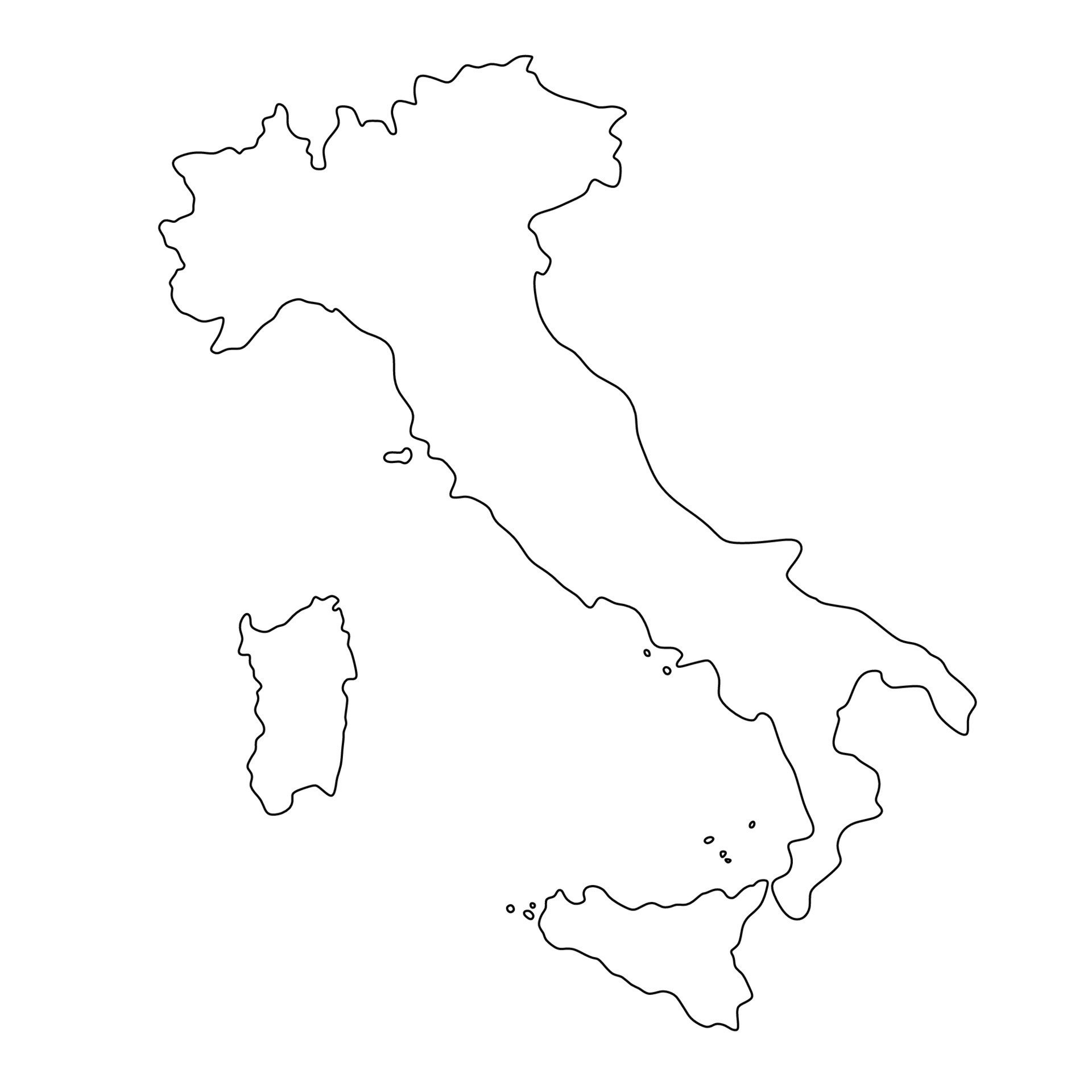
Interactive Campus Map
Explore medical excellence across the Italian peninsula.