UniCamillus Rome
Saint Camillus International University of Health and Medical Sciences
Dedicated to training physicians with a global health outlook, specialized competencies in tropical medicine, and humanitarian relief. Featuring large international quotas, dual written+video examination, and clinical training in Rome.
Global Health & Humanitarian Focus
UniCamillus University
Rome, Italy · High Quota Capacity
Annual Capacity
~105 Non-EU / ~425 EU
Written Blueprint
51 Qs CBT (60 Mins)
Oral Component
Video Interview (15 Pts)
Annual Tuition
€21,000 / year (4 parts)
Campus gallery
See where you will study
Real campus, teaching and clinical environments from the university and credited editorial sources.
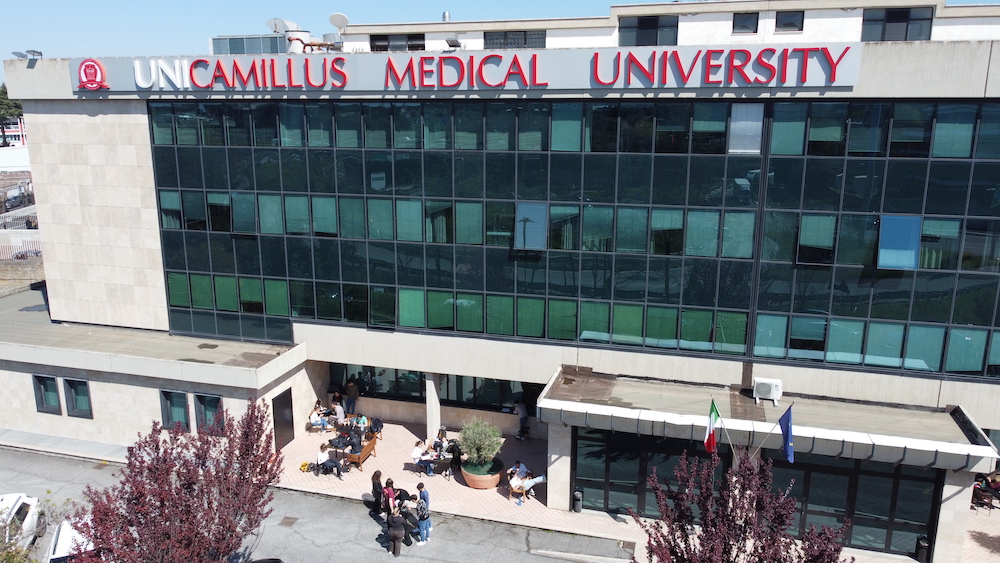
Rome campus
The main teaching building and student hub.
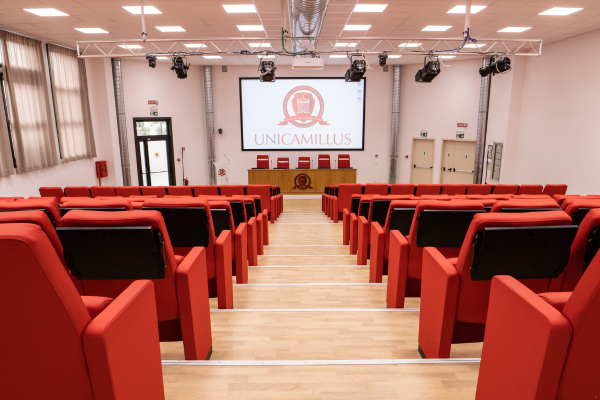
UniLabs theatre
A tiered hall used for large medical lectures.
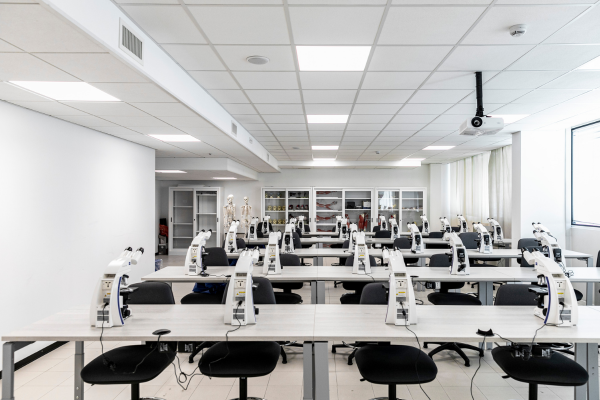
Microscopy lab
Dedicated practical space for biology and histology.
Degree
Medicine & Surgery (MD)
Hospital Network
Tor Vergata & Roman ASLs
Exam
51 Qs CBT + Video Interview
Duration
6 Years (360 ECTS)
Tuition
€21,000 / yr (4 parts)
Campus
Rome, Italy
Humanitarian Medicine with European Accreditation
Saint Camillus International University of Health and Medical Sciences was founded with an explicit mission: educating medical professionals with exceptional technical competence and deep ethical commitment to humanitarian healthcare.
Curriculum integrated with Tropical Medicine, Epidemiology of Neglected Diseases, and Disaster Management.
Extensive clinical partnerships across Rome, including Policlinico Tor Vergata, ASL Roma 2, and accredited research hospitals.
Highly international student cohort from more than 60 countries creating a multicultural clinical community.
Full accreditation under EU Directive 2005/36/EC and recognized by the World Health Organization (WHO).
Key Metrics & Features
530+ Seats
Total Quota
Generous capacity for EU & Non-EU
66 Pts Max
Written + Oral
51 Written Qs + 15 Oral Interview
60+ Nations
Global Reach
Diverse international student body
EU Directive
Accreditation
Automatic practice rights across EU
Examination Blueprint
51 Written Qs + Video Interview
The UniCamillus admission evaluation combines a computer-based scientific test with an asynchronous video interview evaluating English communication, motivation, and ethical readiness.
+1.0
Correct Written
-0.25
Incorrect Written
0
Blank
Oral Video Interview (Max 15 Pts)
Conducted via automated video platform. You are presented with structured questions on humanitarian medicine, empathy, and personal trajectory with timed recording windows.
Written Test Subject Breakdown (Max 51 Pts)
Cellular biology, bioenergetics, human genetics, molecular physiology, organ systems, histology foundations.
General and organic chemistry, atomic structure, chemical bonding, stoichiometry, acid-base equilibria, biomolecules.
Kinematics, dynamics, thermodynamics, fluid mechanics, electrostatics, basic DC circuits, optics.
Algebraic equations, functions, trigonometry, geometry, probability, and biostatistics basics.
Contemporary world history, global healthcare institutions (WHO, UN), and deductive reasoning.
Full 6-Year Medical Degree Syllabus
UniCamillus combines foundational European medical accreditation with specialized competencies in infectious disease control, global surgery, and humanitarian medicine.
Year 1: Biological & Molecular Foundations
Preclinical Sciences, Biophysics, Anatomy & Global Health
Medical Physics, Biophysics & Computer Science
Radiation physics, bioelectricity, optical diagnostics, fluid mechanics, biomedical data analysis.
Chemistry & Foundations of Medical Biochemistry
Chemical thermodynamics, metabolic pathways, enzyme catalysis, bioenergetics, structural lipidomics, and proteomics.
Cellular & Molecular Biology
Membrane transport mechanisms, organellar trafficking, signaling cascades, epigenetic control, apoptosis.
Histology, Cytology & Human Embryology
Microscopic tissue architecture, stem cell biology, early embryonic germ layer specialization, organogenesis.
Human Gross Anatomy I (Locomotor & Thoracic)
Musculoskeletal biomechanics, cardiovascular morphology, mediastinal anatomy, respiratory system, clinical imaging correlates.
Global Health, Humanitarian Principles & Bioethics
Global burden of disease, healthcare in developing countries, ethics of humanitarian intervention, patient rights.
First Aid & CPR Certification Lab
Cardiopulmonary resuscitation, defibrillation, first aid skills, simulation lab training at UniCamillus suites.
Clinical Clerkship Focus: First Aid Training & Basic Nursing Clerkship in partner Roman medical facilities.
Year 2: Morphological Systems & Mechanisms of Disease
Systemic Physiology, Pathology, Immunology & Tropical Medicine
Human Gross Anatomy II (Neuroanatomy & Viscera)
Cranial nerves, central nervous system pathways, digestive, urogenital, and endocrine structural morphology.
Systemic Human Physiology I & II
Cardiac electrophysiology, pulmonary mechanics, renal regulation, gastrointestinal motility, neurophysiology, endocrine axes.
General Pathology & Pathophysiology
Cellular injury, inflammation, tissue repair, hemodynamic disorders, shock, thrombosis, molecular carcinogenesis.
Immunology & Immunopathology
Innate and adaptive immunity, lymphocyte activation, hypersensitivity, autoimmune pathologies, immunodeficiencies.
Medical Microbiology, Virology & Parasitology
Bacterial virulence factors, antimicrobial resistance, viral replication strategies, mycoses, clinical parasitology.
Tropical Diseases & Global Infectious Epidemiology
Malaria, tuberculosis, HIV/AIDS, neglected tropical diseases (NTDs), vector-borne epidemics, and public health interventions.
Physical Semeiotics & Bedside Communication
Chest auscultation, abdominal palpation, neurological exam, and history taking in university hospital wards.
Clinical Clerkship Focus: Physical Semeiotics & Bedside Nursing in Roman partner hospital wards.
Year 3: Pathology, Pharmacology & Bedside Rotations
Systemic Pathology, Clinical Pharmacology & Inpatient Wards
Systemic Anatomic Pathology
Histopathological diagnosis of cardiovascular, pulmonary, gastrointestinal, hepatic, renal, and skin diseases; biopsy interpretation.
General & Clinical Pharmacology
Pharmacodynamics, pharmacokinetics, autonomic pharmacology, cardiovascular agents, chemotherapy, toxicology, personalized medicine.
Medical & Surgical Semeiotics (Methodology)
Clinical diagnostic reasoning, differential diagnosis formulation, symptom analysis, and bedside presentation.
Laboratory Medicine & Molecular Diagnostics
Clinical hematology, biochemical biomarkers, coagulation profiling, urinalysis, and point-of-care testing technologies.
Cardiovascular System Diseases
Coronary artery disease, heart failure, arrhythmias, valvular disorders, hypertension, interventional catheterization.
Respiratory System Diseases
COPD, asthma, interstitial lung diseases, pulmonary embolism, pneumonia, thoracic oncology, and non-invasive ventilation.
Inpatient Bedside Clinical Clerkships
Daily ward rounds in Internal Medicine and General Surgery, patient case management, and morning clinical meetings.
Clinical Clerkship Focus: Daily Inpatient Ward Rotations in Internal Medicine & General Surgery Wards.
Year 4: Specialized Medical & Surgical Disciplines
Organ-System Subspecialties & Multidisciplinary Oncology
Gastroenterology, Hepatology & Endoscopy
GI bleeding, inflammatory bowel disease, viral hepatitis, cirrhosis, pancreatitis, diagnostic and interventional endoscopy.
Endocrinology, Diabetology & Metabolism
Thyroid pathology, pituitary disorders, adrenal insufficiency, diabetes management, metabolic bone diseases.
Nephrology, Dialysis & Urology
Acute and chronic renal failure, glomerulonephritis, hemodialysis and transplantation, urological cancers, and lithiasis.
Rheumatology & Autoimmune Disorders
Rheumatoid arthritis, SLE, systemic sclerosis, spondyloarthropathies, vasculitides, and biological targeted therapies.
Hematology & Transfusion Medicine
Leukemias, lymphomas, myeloma, hemolytic anemias, bone marrow transplantation, and hemotherapy protocols.
Medical Oncology & Cancer Immunotherapy
Oncogenesis, molecular tumor profiling, immune checkpoint inhibitors, chemotherapy regimens, palliative care.
Diagnostic Imaging & Interventional Radiology
X-ray, ultrasound, CT, MRI, PET-CT protocols, interventional vascular and oncological radiological procedures.
Subspecialty Outpatient & Inpatient Rotations
Rotations across specialized clinical units, endoscopy suites, and multidisciplinary tumor boards.
Clinical Clerkship Focus: Specialized Department Internships, Diagnostic Endoscopy Suites & Case Reviews.
Year 5: Neuroscience, Sensory Organs & Maternal-Child Health
Clinical Neurosciences, Head & Neck, Musculoskeletal & Pediatrics
Neurology & Clinical Neurophysiology
Stroke units, epilepsy, neurodegenerative diseases, multiple sclerosis, peripheral neuropathies, neurocritical care.
Neurosurgery & Minimally Invasive Approaches
Intracranial neoplasms, aneurysms, neurotrauma, spine surgery, robotic and endoscopic neurosurgery.
Psychiatry & Behavioral Health
Depressive and bipolar disorders, schizophrenia, anxiety disorders, psychopharmacology, emergency psychiatry.
Orthopedics, Traumatology & Sports Medicine
Fracture management, joint reconstruction (hip, knee), spine surgery, arthroscopy, and musculoskeletal rehabilitation.
Ophthalmology & Visual Sciences
Refractive surgery, cataract, glaucoma, retinal diseases, ocular emergencies, and neuro-ophthalmology.
Otorhinolaryngology & Head-Neck Surgery
ENT oncology, otology, audiology, rhinology, airway management, and reconstructive head and neck surgery.
Dermatology, Venereology & Plastic Surgery
Inflammatory skin disorders, melanoma, cutaneous surgery, aesthetic and reconstructive plastic surgery.
Obstetrics, Gynecology & Reproductive Medicine
High-risk pregnancy, labor management, gynecological oncology, minimally invasive laparoscopic surgery, IVF.
Pediatrics, Neonatology & Pediatric Specialties
Neonatal intensive care, growth disorders, pediatric infections, pediatric emergency triage, congenital diseases.
Surgical Theater & Maternity Traineeships
Scrubbed-in surgical training, labor ward assistance, and pediatric emergency clerkships.
Clinical Clerkship Focus: Operating Room Surgical Clerkships, Labor & Delivery Wards, and Pediatric Emergency Department.
Year 6: Critical Care, Evaluative Traineeship (TPV) & MD Thesis
Emergency Medicine, Official Licensing Internship & Degree Defense
Emergency Medicine & Acute Trauma Care
Shock management, mass casualty triage, ACLS protocols, trauma resuscitation, emergency point-of-care ultrasound (POCUS).
Intensive Care, Anesthesiology & Pain Medicine
Invasive monitoring, ventilator management, perioperative care, regional/general anesthesia, palliative analgesia.
Clinical Toxicology & Poisoning Emergencies
Acute drug intoxications, biological toxins, industrial poisonings, antidotal treatments, and dialysis detoxification.
Forensic Medicine, Deontology & Healthcare Law
Medical liability, ethics in intensive care, patient consent, autopsy findings, and professional jurisprudence.
Public Health, Hygiene & Global Health Systems
Hospital infection control, epidemiology, health economics, preventative medicine, and global health policy.
Practical Evaluative Traineeship (TPV Internal Medicine)
Official licensing clinical rotation in Internal Medicine inpatient units.
Practical Evaluative Traineeship (TPV General Surgery)
Official licensing clinical rotation in General Surgery operating and ward units.
Practical Evaluative Traineeship (TPV General Practice)
Official licensing clinical rotation with accredited primary care physicians.
Experimental Research MD Thesis Defense
Independent scientific thesis based on laboratory or clinical investigation defended before the university degree commission.
Clinical Clerkship Focus: Full-Time Practical Sub-Internships in Emergency Department, Intensive Care Units & Primary Care.
€21,000 Annual Tuition Installment Plan
Tuition at UniCamillus is fixed at €21,000 per academic year, divided into four structured installments.
€2,000
📅 Within 5-7 days of ranking release
Mandatory deposit to confirm matriculation and secure seat allocation.
€6,000
📅 October / Term Start
Due at formal academic term commencement and course enrollment.
€6,500
📅 January / Semester 1 Mid-Term
Mid-year payment covering semester 1 exams and laboratories.
€6,500
📅 April / Semester 2 Commencement
Final installment covering semester 2 clinical clerkships.
8-Step Application & Visa Roadmap
Essential steps to successfully matriculate at UniCamillus Rome.
Check Seat Quotas & Secondary Education
UniCamillus provides high annual quotas (~105 Non-EU / ~425 EU seats). Candidates must possess a 12-year secondary school qualification.
Register on UniCamillus Portal
Create your applicant account on the official UniCamillus portal (unicamillus.org), input identification, and pay the €180 exam fee.
Sit the Computer-Based Written Test (UCAT Camillus)
Take the 51-question written scientific test in 60 minutes via certified online remote proctoring.
Complete the Asynchronous Oral Video Interview
Record short video responses (10-15 mins) assessing your motivation, humanitarian outlook, and bioethical awareness (Max 15 points).
Merit Ranking & €2,000 Initial Deposit
Confirm your admission place by paying the €2,000 first installment within the published ranking confirmation window.
Submit Universitaly Pre-Enrollment (Non-EU)
Non-EU students submit their visa pre-enrollment application on Universitaly, selecting UniCamillus.
Legalize Academic Diplomas (CIMEA or DOV)
Secure the CIMEA Statement of Comparability & Verification or the consular Declaration of Value for your high school diploma.
Student Visa & Campus Matriculation in Rome
Receive your Italian Type D Student Visa, travel to Rome, apply for your Permesso di Soggiorno, and attend campus orientation.
Frequently Asked Questions
Essential answers on UniCamillus testing, international degrees, and clinical training.
How does the UniCamillus two-stage admission process work?
The evaluation comprises two parts: a 51-question written scientific test (max 51 points: Biology 22, Chemistry 14, Physics 7, Math 7, Logic 1) and an asynchronous oral video interview (max 15 points), giving a combined maximum score of 66.0 points.
What is the oral video interview and how is it conducted?
After completing the written test, candidates access an automated video assessment platform. You are shown timed prompts evaluating your motivation for studying medicine, commitment to humanitarian care, English fluency, and ethical judgment, with 2 minutes to record each response.
Where do UniCamillus students perform clinical clerkships?
Clinical training takes place across major hospital centers in the metropolitan area of Rome, including Policlinico Tor Vergata, ASL Roma 2 hospitals, and affiliated specialized diagnostic institutes.
What is the tuition fee structure at UniCamillus?
Tuition is a flat €21,000 per academic year, structured into four installments (€2,000 deposit upon admission + €6,000 in October + €6,500 in January + €6,500 in April).
Is the UniCamillus MD degree recognized across the EU and globally?
Yes. The degree is fully accredited under EU Directive 2005/36/EC, listed in WDOMS, and recognized by the ECFMG (USA) and General Medical Council (GMC, UK).
What is the special mission of UniCamillus?
UniCamillus is uniquely dedicated to international health sciences, preparing physicians to tackle global health crises, neglected tropical diseases, and humanitarian healthcare delivery in underserved regions worldwide.
Are Non-EU candidates required to speak Italian to apply?
No Italian proficiency is required for admissions. The degree is taught 100% in English. The university integrates Italian language courses during Years 1 and 2 to prepare students for patient communication in Year 3.
Does UniCamillus offer campus accommodation or student housing?
UniCamillus offers student housing advisory services and partnerships with nearby modern student residences and private apartments in the eastern Rome metropolitan corridor.
Prepare for UniCamillus Rome with Meditaliano
Get specialized coaching for the UCAT Camillus scientific test, oral video interview preparation, and full visa guidance.